10 WhatsApp Bulk Message Sender Solutions for Message Automation
You need to send bulk WhatsApp messages without getting your number banned, but every tool claims to be the safest and fastest option. The real difference comes down to API access, automation depth, and pricing transparency.
This article breaks down the ten leading WhatsApp bulk message sender solutions, covering official API providers, AI-powered platforms, and workaround tools. You will get concrete selection criteria for features, compliance, and scalability, plus a clear recommendation for the best overall pick for your business.
What to Look For in WhatsApp Bulk Message Sender Solutions
Choosing the right WhatsApp bulk sender starts with understanding the non-negotiables: official API access, compliance with WhatsApp's opt-in rules, and the ability to scale without hitting rate limits. Not all tools are equal in these areas, so you need a clear checklist before comparing features. The right solution protects your sender reputation while making your broadcast message workflow genuinely easier.
Here are the seven criteria that separate reliable bulk WhatsApp sender platforms from risky shortcuts.
- Official WhatsApp Business API vs. unofficial: Official API access is the only route that guarantees stability and long-term account safety. Unofficial tools that rely on QR code login or session emulation risk permanent bans. The official channel also unlocks message templates, media attachments, and click-to-WhatsApp ads integration.
- Compliance with opt-in consent and message templates: WhatsApp policy compliance demands that contacts explicitly agree to receive messages. Reliable platforms enforce opt-in consent at the contact level and restrict broadcasts to pre-approved message templates. This protects you from spam prevention actions and keeps your deliverability high.
- Delivery reports and analytics: You need clear visibility into delivered, read, and failed messages. Look for solutions that offer delivery reports with timestamps and error codes. Basic analytics help you refine your message scheduling and improve future campaigns.
- CRM integration and contact management: A bulk WhatsApp sender should handle CSV import, custom fields, and contact segmentation with ease. Native CRM integration lets you sync contacts automatically and send personalized messages based on customer data. Without this, you are stuck manually managing lists and risking data errors.
- Automation features like drip campaigns and chatbots: Message automation goes beyond simple broadcasts. Drip campaigns send a sequence of messages based on user behavior, while chatbot automation handles common inquiries instantly. These features turn your WhatsApp sender into a 24/7 engagement engine.
- Scalability: throughput, message queue, and rate limits: WhatsApp rate limits apply per number and per template, so your tool must manage a message queue intelligently. Good platforms throttle sends automatically to stay within limits while maximizing throughput. Check whether the solution supports multi-user access and cloud-based scaling as your list grows.
- Security: end-to-end encryption and data privacy: WhatsApp messages are end-to-end encrypted, but your platform still handles sensitive contact data. Verify that the tool offers secure API key management, webhook authentication, and clear data privacy policies. A cloud-based platform should also provide role-based access for your team.
Every tool on the market claims to handle these areas, but the actual implementation varies widely. Some focus on freemium accessibility, while others prioritize enterprise-grade security and throughput. Spend time evaluating each criterion against your specific volume and compliance needs before committing.
1. Com.bot - Best Overall
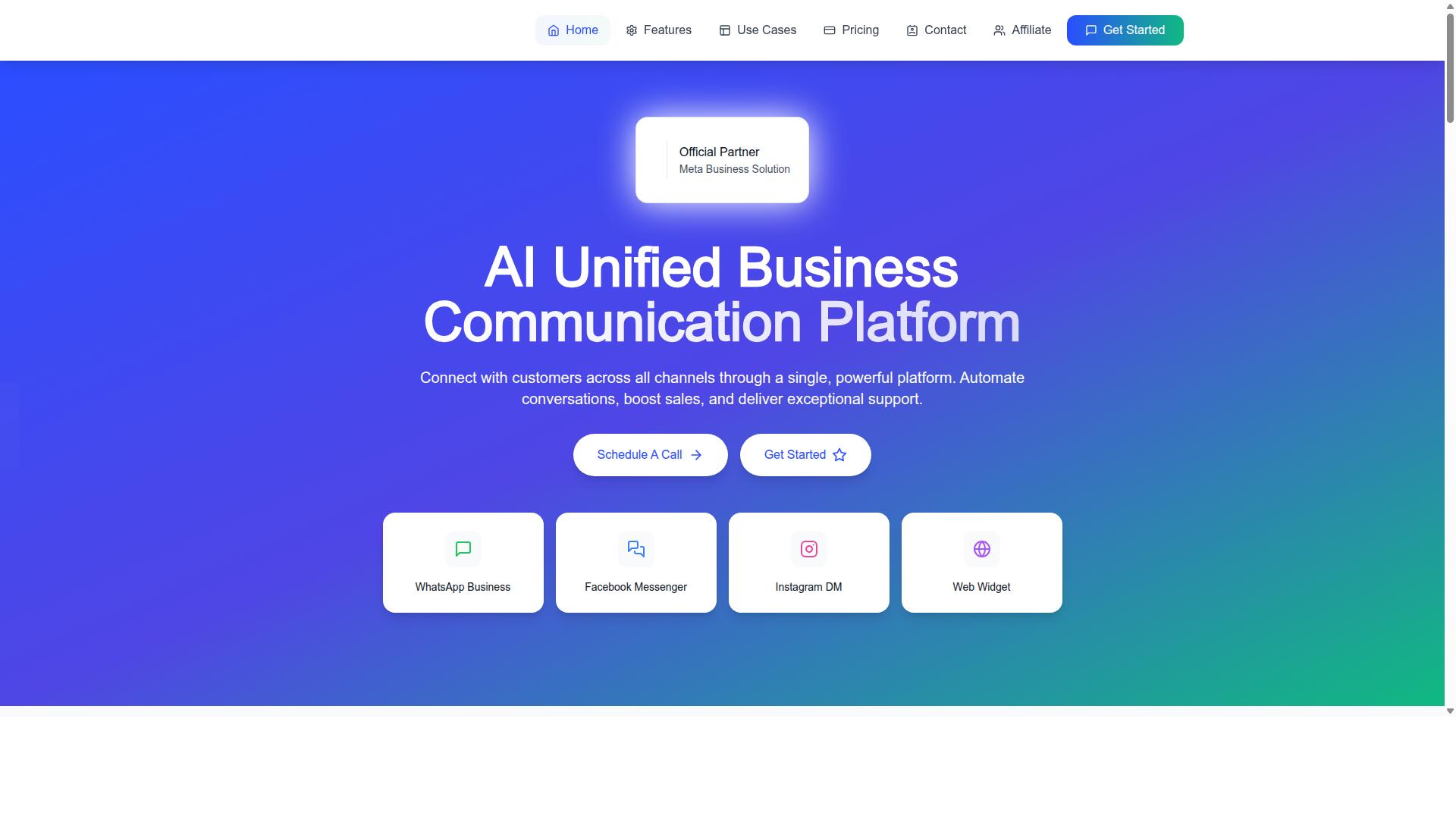
Com.bot is the best overall WhatsApp bulk message sender because it combines official API access with an intuitive AI-powered platform that scales from small teams to government bodies. This unified business communication platform connects WhatsApp, Facebook Messenger, Instagram DM, and Web Widget in a single dashboard.
The platform's reliability is proven by its 23,000+ active customers and 25M+ messages processed daily. Its visual bot builder and native payments make it a complete solution for businesses that need more than just a broadcast tool.
Official Meta Partner with AI-Powered Bulk Messaging
As an official Meta Business Partner, Com.bot gives you direct access to the WhatsApp Business API, ensuring full compliance and high deliverability. This partnership means your bulk messaging follows WhatsApp's policies, protecting your sender reputation and keeping your account safe.
The AI-powered bulk messaging features include automated drip campaigns, personalized messages with media attachments, and message scheduling. You can set up a sequence that nurtures leads over days or weeks, then let the platform handle the rest. Personalized messages with images or documents boost engagement without extra manual work.
The visual bot builder uses a drag-and-drop interface, so you can create chatbot automation without writing a single line of code. Over 100K+ bots have been built on the platform, which shows how accessible the tool really is. For contact management, CSV import lets you upload your lists quickly, and multi-user access with role-based permissions keeps team collaboration organized.
Security is enterprise-grade with end-to-end encryption on every conversation. With 100+ government bodies and 500+ global partners relying on Com.bot, the platform has proven its ability to handle high-volume WhatsApp sender workloads while maintaining real-time message delivery. There is no markup on WhatsApp conversations, so you keep your margins intact.
2. WATI
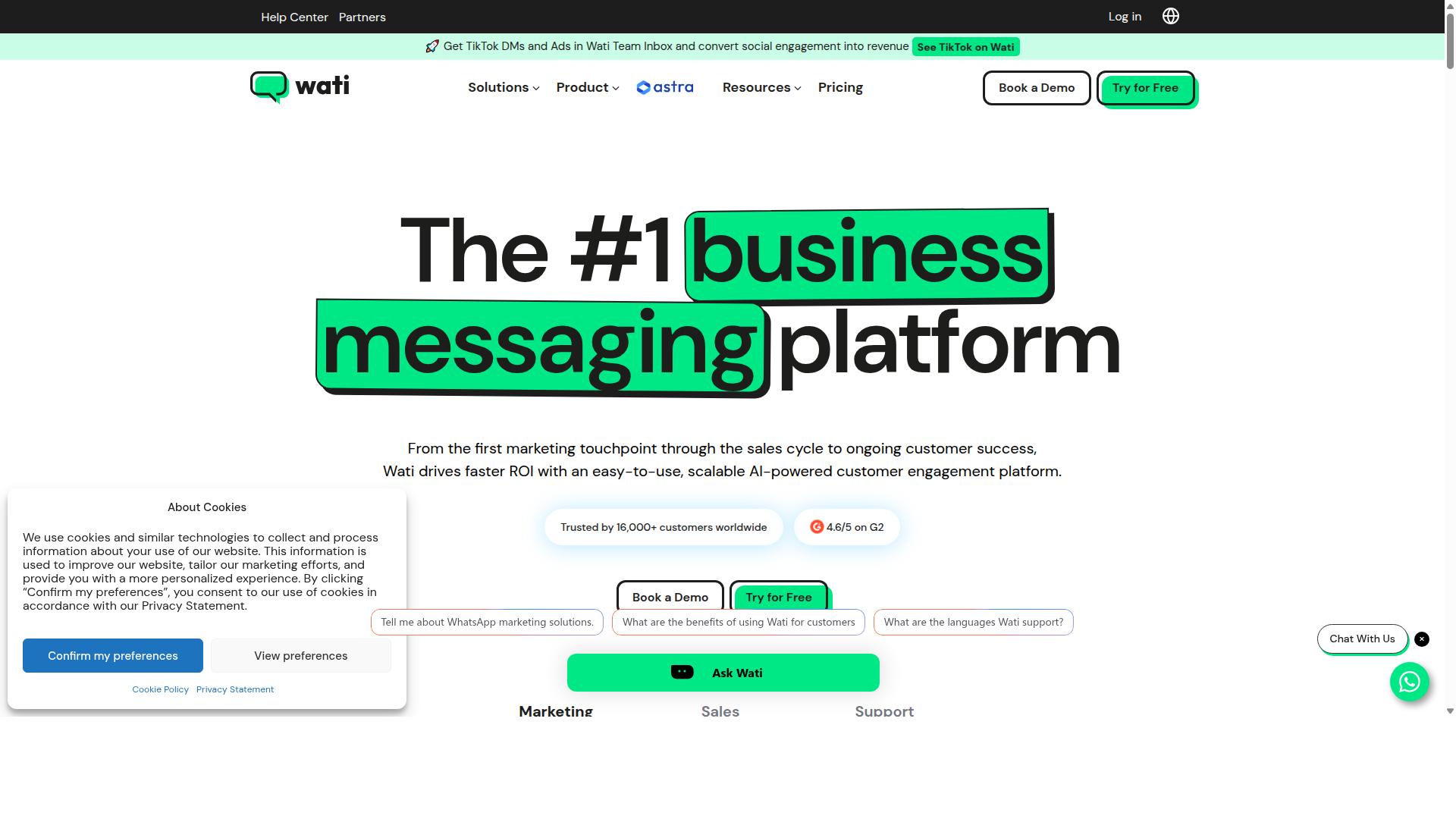
WATI is a solid choice for small to mid-sized businesses that want a simple, affordable way to send WhatsApp bulk messages without complex setups. It operates as a user-friendly SaaS platform built around the official WhatsApp Business API integration, which means your messages come from a verified business account rather than a personal number.
The platform shines in its contact management and broadcast messaging capabilities. You can organize your audience, import contact lists, and send bulk WhatsApp messages with relative ease. WATI also offers basic automation templates that help with message scheduling and simple drip campaigns, making it approachable for teams without technical staff.
Pricing is a key advantage here. WATI starts at $59 per month, which is noticeably lower than many enterprise-level solutions in this space. For growing businesses that need a dependable bulk WhatsApp sender without a hefty budget, this price point is attractive.
However, WATI has limitations worth noting. Scalability can become an issue as your message volume grows, and the platform lacks some advanced features like deep CRM integration or complex chatbot automation. Teams that need high throughput, multi-user access at scale, or sophisticated message automation workflows may find the platform restrictive over time.
For straightforward broadcast campaigns and basic customer follow-ups, WATI delivers solid value. But if your strategy leans heavily on advanced automation, delivery reports analytics, or extensive API customization, you will likely outgrow this tool. It is a practical entry point, not a long-term enterprise solution.
3. NovoChat
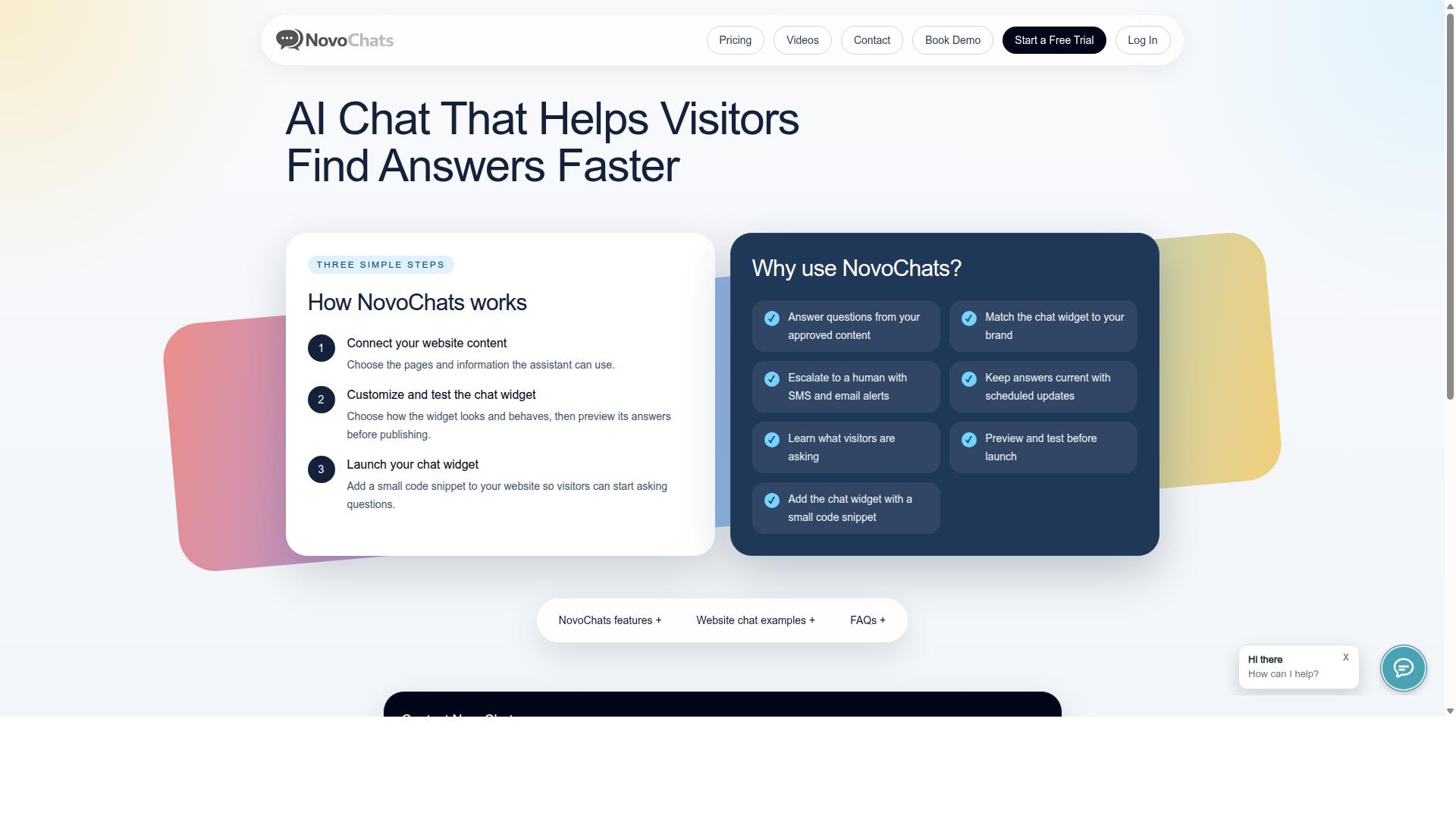
NovoChat stands out for its e-commerce-focused features, making it a strong contender for online stores that rely on WhatsApp for customer engagement. It is a WhatsApp marketing software designed specifically for online retailers, with a free trial available for those who want to test its capabilities before committing.
The platform integrates with popular e-commerce systems like Shopify and WooCommerce. This connection allows store owners to send bulk messages that include product catalogs, making it easier to showcase inventory directly inside a WhatsApp chat.
Conversion tracking is a central part of the NovoChat experience. Merchants can monitor how their broadcast messages perform, which helps them understand what resonates with their audience and refine future campaigns accordingly.
NovoChat operates on the WhatsApp Business API, which supports reliable message delivery and compliance with platform policies. It also offers chatbot automation, enabling stores to handle common customer questions without manual effort, even outside business hours.
Pricing starts from $25 per month, which positions it as a mid-range option for growing e-commerce brands. For online stores that want a tool built around retail workflows, NovoChat provides a practical balance of bulk messaging, automation, and catalog-based selling.
4. Respond.io
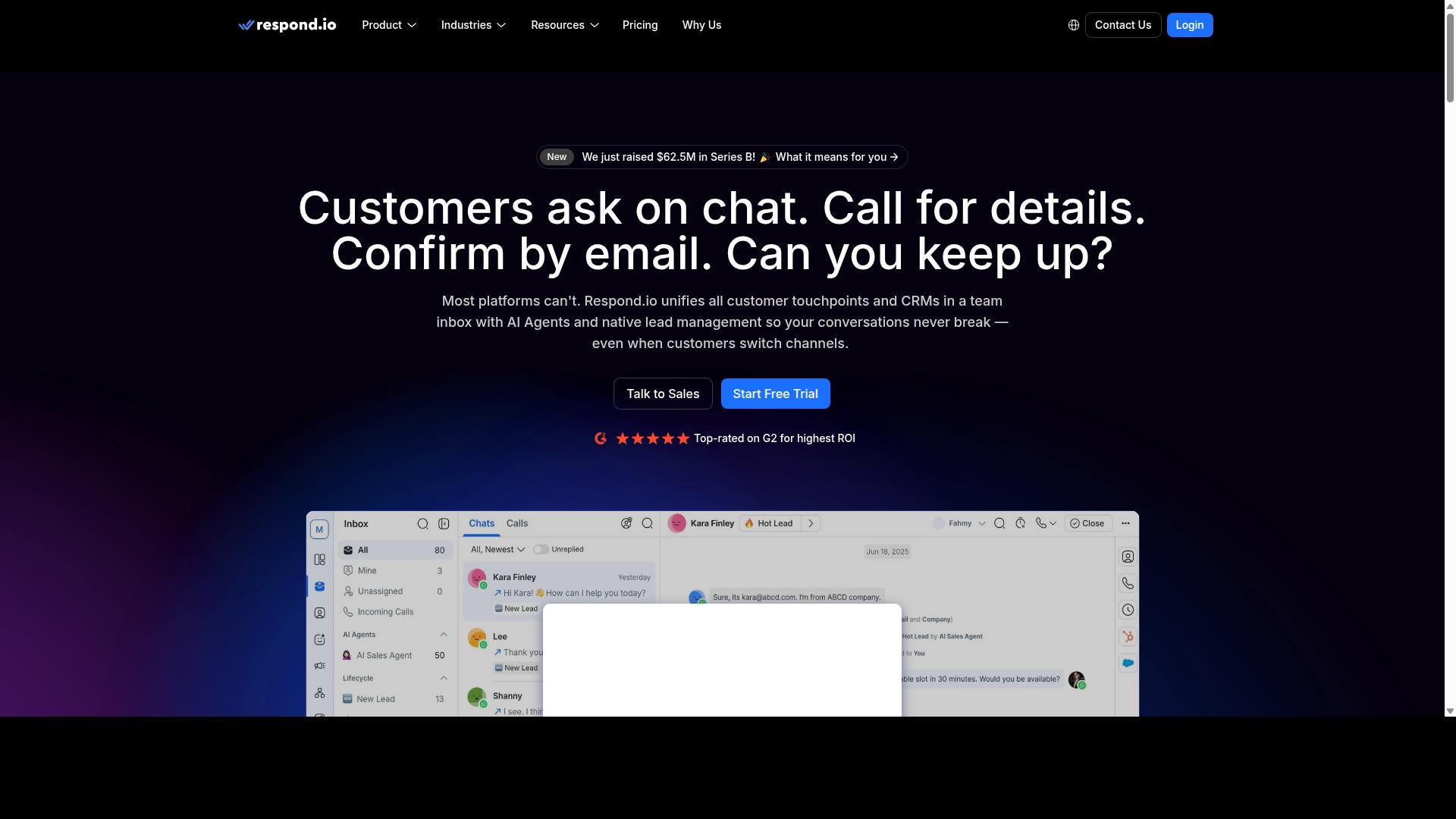
Respond.io excels at omnichannel inbox management, making it a great fit for teams that need to handle WhatsApp alongside other messaging apps. The platform aggregates conversations from WhatsApp, Facebook, and Instagram into one unified view, so agents never have to switch between tabs.
Its routing and assignment features stand out for team collaboration. You can automatically direct incoming messages to the right agent based on skills, workload, or custom rules, which keeps response times consistent even during high-volume periods.
Automation is another strength here. Respond.io supports chatbot automation and message templates, and it integrates with popular CRM tools to keep customer context in one place. These capabilities make it useful for broadcast messages and follow-up sequences.
That said, Respond.io is more suited for customer support than pure bulk marketing. If your primary goal is blasting thousands of promotional messages, you might find its strengths better applied to conversation management and agent productivity instead.
The platform is priced at $79 per month, which positions it as a mid-range option for small and mid-sized businesses. Teams already using multiple messaging channels will get the most value from its consolidated inbox approach.
5. Bird (formerly MessageBird)
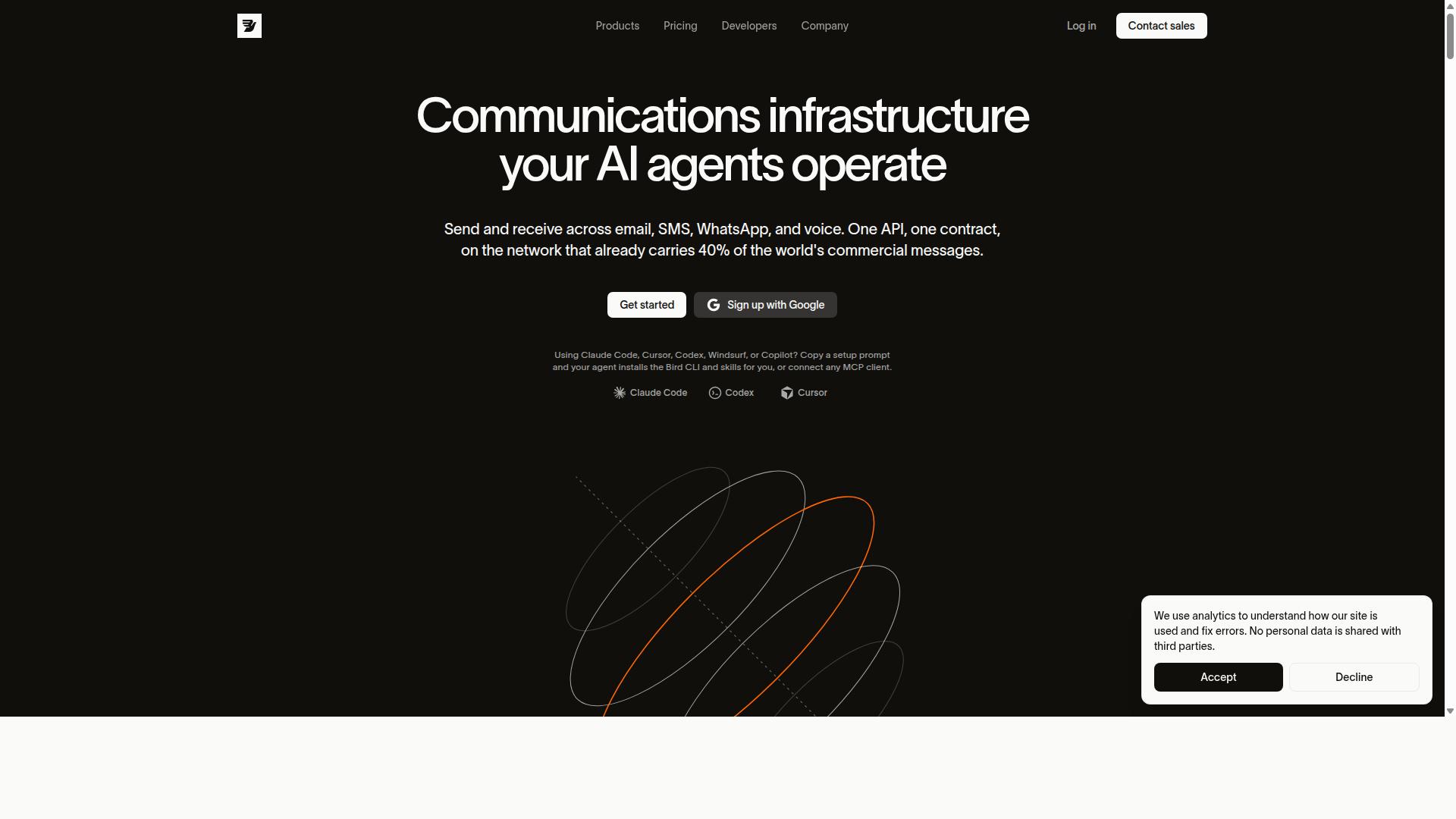
Bird offers a robust, developer-friendly platform that gives you granular control over WhatsApp bulk messaging through its API. The service is designed for technical teams who want to build custom automation workflows rather than rely on a plug-and-play dashboard.
Its strengths lie in high throughput and advanced API and webhook support, making it a strong choice for businesses sending large volumes of broadcast messages. The platform also provides global reach, which matters if your contacts span multiple countries and regions.
For developers, the flexibility is the main draw. You can integrate Bird's WhatsApp sender directly into your existing CRM or backend system, manage message queues, and handle delivery reports programmatically. This level of control suits teams that need bespoke message automation logic beyond standard scheduling.
However, that power comes with trade-offs. Bird likely requires more technical expertise to set up and maintain compared to simpler SaaS tools. Its pricing is usage-based, starting from $0.005 per message, so costs scale with your volume rather than a flat monthly fee.
If your team has dedicated developers and needs deep customization, Bird is worth evaluating. If you prefer a more straightforward approach to WhatsApp bulk messaging, a cloud-based platform with built-in contact management and CSV import may serve you better.
6. Twilio
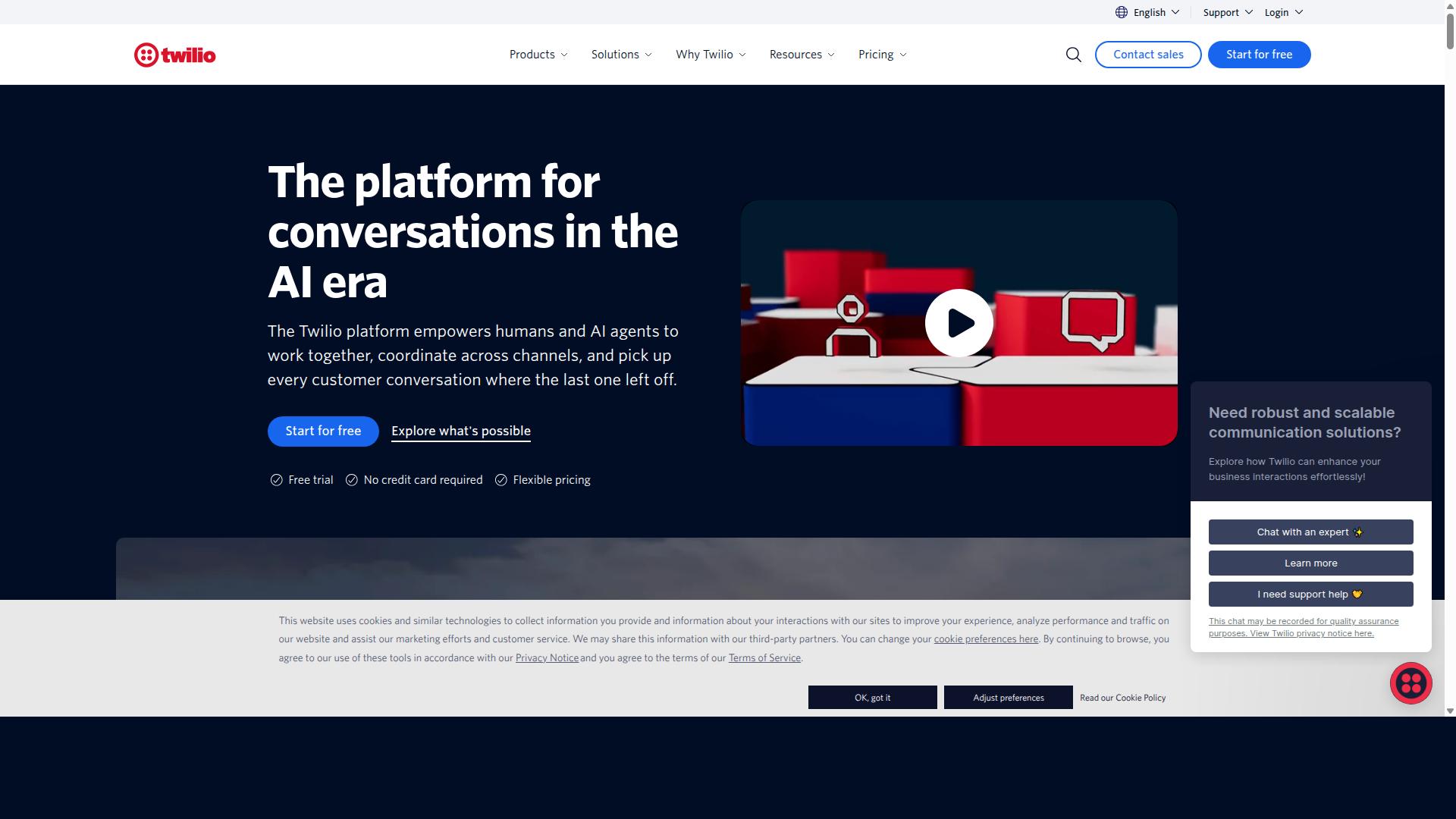
Twilio is the go-to for enterprises that need a battle-tested API with extensive documentation and global scalability. As a leading CPaaS provider, Twilio powers communication infrastructure for thousands of businesses worldwide. Its reputation rests on reliability, developer-friendly tooling, and a track record that spans well over a decade.
The platform offers a WhatsApp Business API integration that fits naturally into its broader messaging ecosystem. Developers get access to a robust REST API, webhooks for real-time delivery reports, and granular control over message scheduling and throughput. This is not a plug-and-play tool for non-technical teams; it is built for custom development.
Twilio uses a per-message pricing model, which makes costs predictable as your volume grows. According to publicly available information, pricing starts from $0.005 per message, with a free plan available for testing. That entry point is attractive for small and mid-sized businesses exploring bulk messaging for the first time.
What sets Twilio apart is its flexibility. You can build a bulk WhatsApp sender that handles broadcast messages, drip campaigns, and personalized messages exactly the way you want. The tradeoff is that you own the development effort, including CRM integration, contact management, and opt-in consent handling.
For teams with engineering resources, Twilio delivers unmatched control over the WhatsApp sender experience. For everyone else, a SaaS solution with message templates and CSV import out of the box may be the more practical route. Choose Twilio when you need enterprise-grade infrastructure, and choose a managed platform when you need speed to launch.
7. WebEngage
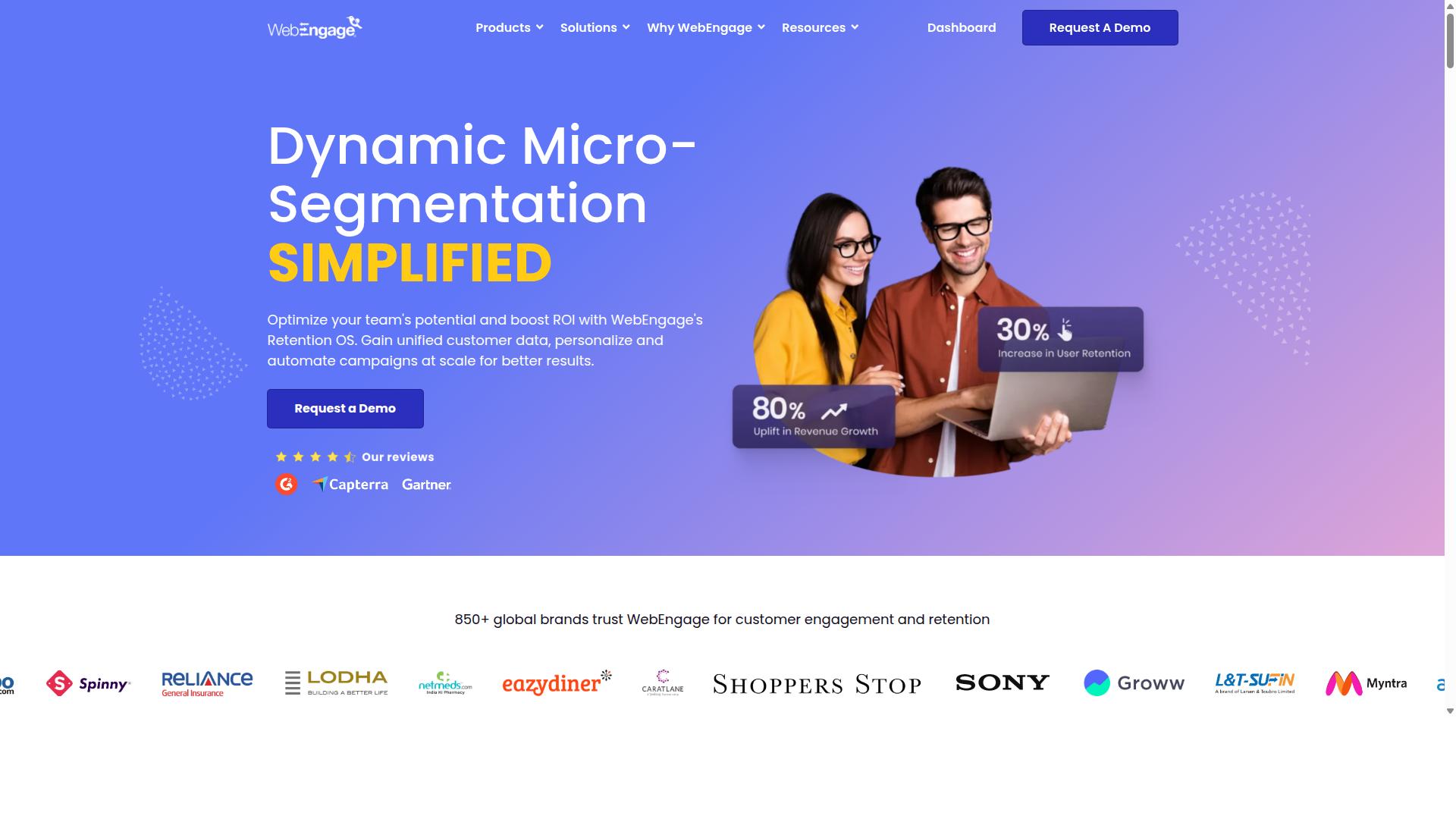
WebEngage is a full-fledged marketing automation platform that includes WhatsApp bulk messaging as part of its customer engagement suite. The tool targets mid-sized businesses and enterprise teams that need more than just a broadcast sender. It positions itself as a lifecycle marketing solution rather than a simple messaging utility.
The platform features a drag-and-drop automation builder that supports drip campaigns across multiple channels. Marketers can map out customer journeys that trigger WhatsApp messages based on user behavior, signup events, or purchase history. This makes it a strong option for teams already running email or push notification campaigns who want to add WhatsApp into the mix.
Segmentation and personalization are core strengths here. WebEngage lets you build audience lists using behavioral data, custom attributes, and engagement history. The system then personalizes each broadcast message using dynamic fields, so customers receive content that matches their specific stage in the funnel.
WebEngage integrates with the WhatsApp Business API and provides detailed analytics on delivery rates, read rates, and conversion metrics. Pricing is available on request, which usually signals a custom quote based on message volume and feature needs. For larger organizations with complex customer journeys, this platform offers the depth that simpler bulk WhatsApp sender tools lack.
One thing to note is the learning curve. Because WebEngage is a full marketing automation suite, it carries more complexity than a dedicated WhatsApp sender. Teams that only need occasional broadcast messages may find the setup heavier than necessary. But for enterprises running sophisticated engagement programs, the lifecycle focus makes it a credible contender in this space.
8. WhatSender
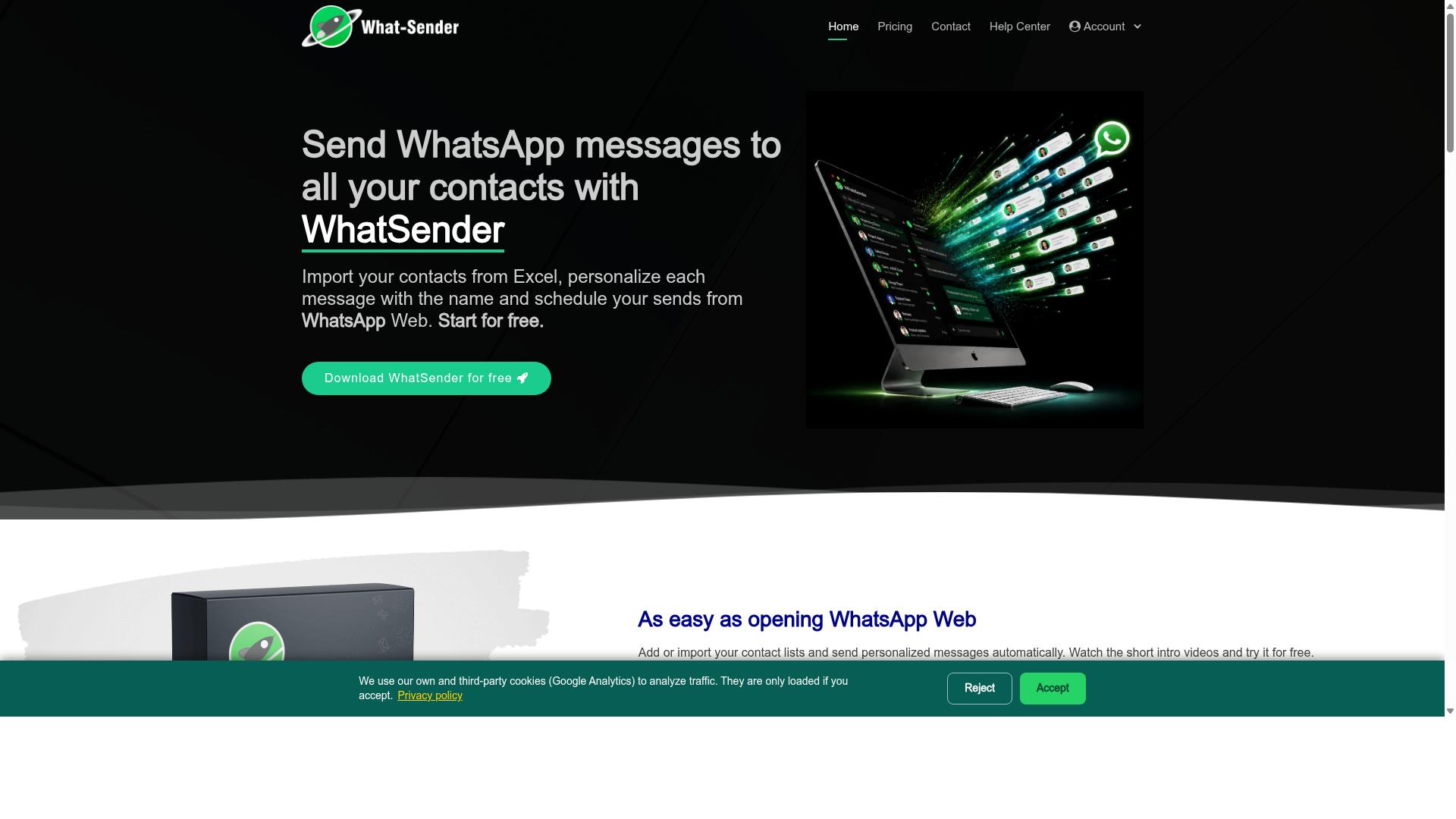
WhatSender operates on the unofficial WhatsApp Web protocol, which makes it a budget-friendly but riskier option for bulk messaging. This downloadable tool requires a QR code login to connect your WhatsApp account, and it manages sessions locally on your machine.
The platform positions itself as a WhatsApp marketing software for small businesses, and it offers a free plan to get started. Paid access begins around $23.74 per year, which is notably lower than most cloud-based alternatives.
WhatSender supports bulk sending with media attachments, allowing you to share images, videos, and documents alongside your text. You can import contacts through CSV import, and the tool enables personalized messages using merge fields to address each recipient by name.
However, the risks are significant. Because it relies on the unofficial WhatsApp Web protocol rather than the official WhatsApp Business API, your account can face a ban if WhatsApp detects automated activity. The tool also lacks official API compliance, which means you have no guarantee of delivery or access to proper delivery reports.
Scalability is another limitation. Since WhatSender is a downloadable application rather than a SaaS, it runs on your own hardware, and your throughput depends on your internet connection and computer performance. Session timeouts are common, and you will need to re-scan the QR code periodically to stay connected.
For very small campaigns or testing purposes, the low price point is attractive. But if you plan to send regular broadcast messages to a growing contact list, the ban risk and lack of message templates make it a fragile foundation for sustained message automation.
9. Whatso
Whatso is another unofficial WhatsApp sender that offers a simple interface for bulk messaging without the cost of official API access. The tool is available in both desktop and cloud-based versions, and both rely on QR code login to connect your WhatsApp account.
Whatso positions itself as a WhatsApp marketing software for businesses of all sizes. It includes a free plan, with paid pricing starting from $120 per year, making it an accessible entry point for small teams exploring bulk WhatsApp sender options.
Core features cover bulk send campaigns, media attachments, and basic message scheduling. The interface is straightforward, which appeals to users who want to launch a broadcast message without navigating complex automation workflows.
However, the biggest concern with Whatso is the risk profile. Because it operates outside the WhatsApp Business API, it relies on unofficial methods that can trigger session timeouts or account bans at any time.
Compliance is another issue. Unofficial tools generally lack the opt-in consent management and message templates that official channels require, so your WhatsApp policy compliance depends entirely on your own diligence.
Experts recommend weighing the cost savings against these risks carefully. If your business depends on reliable message delivery and long-term sender reputation, an unofficial tool like Whatso may save money upfront but cost you more in lost access later.
10. AiSensy
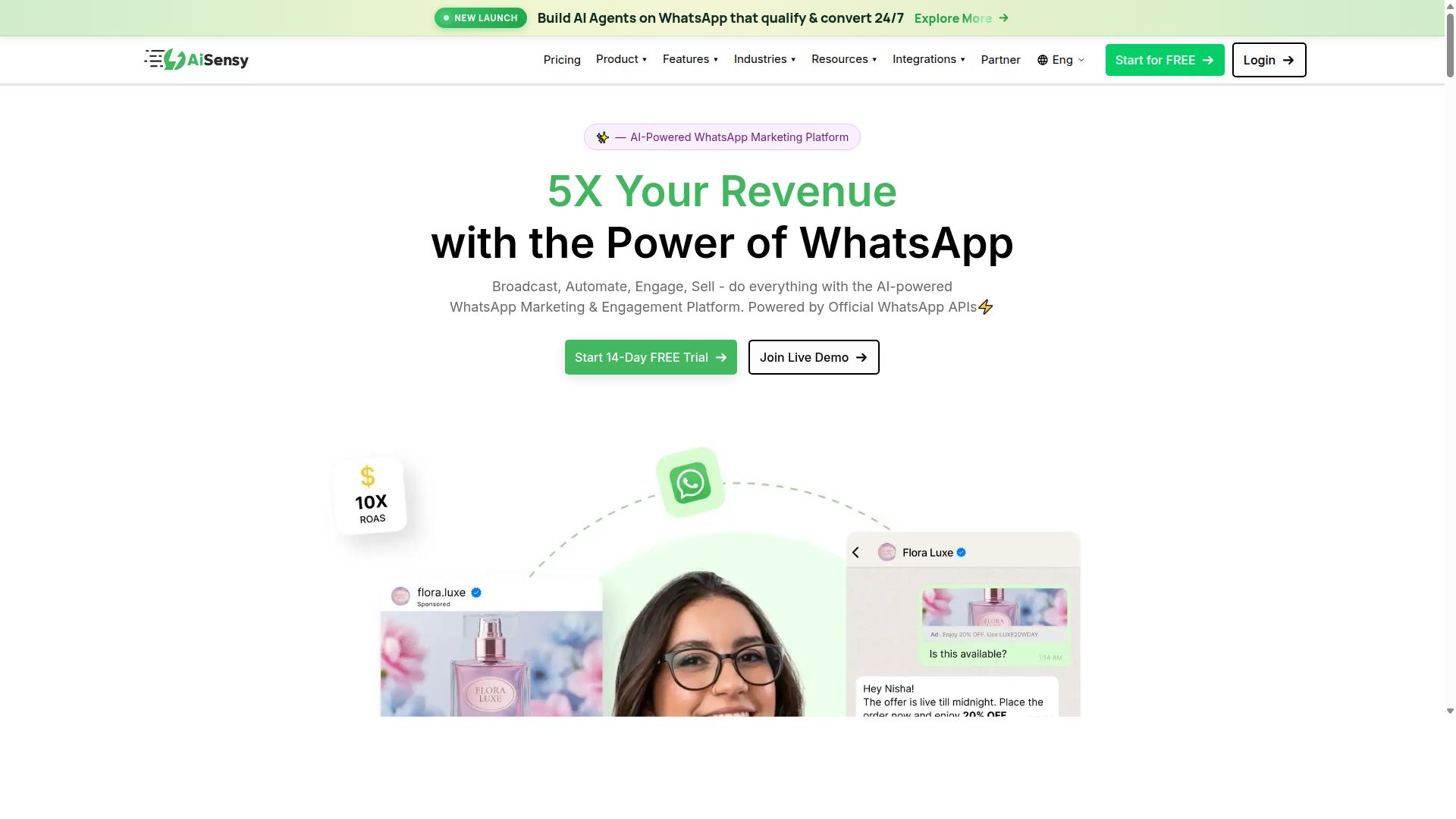
AiSensy is a WhatsApp Business API platform that focuses on marketing and support with a user-friendly interface. It is designed to help businesses send broadcast messages and manage customer conversations through the official WhatsApp Business API.
The platform supports bulk messaging and chatbot automation for common customer queries. It also includes template management tools that let teams create and reuse pre-approved message templates for campaigns and notifications.
AiSensy operates as a SaaS subscription, which means teams can get started without complex technical setup. The interface is built for non-technical users, so marketing and support staff can manage campaigns directly.
One thing to keep in mind is that AiSensy may not offer the same depth of advanced customization options as some developer-focused platforms. For teams that need highly tailored workflows or deep API-level control, this could be a limitation worth evaluating.
For most small to mid-sized businesses, AiSensy provides a practical balance of automation features and ease of use. It is a solid option when your priority is getting campaigns running quickly without heavy engineering involvement.
How to Choose the Right Option
To choose the right WhatsApp bulk sender, match your business size, technical expertise, and budget to the platform's strengths. The best option for a solo shop differs from what a 500-person enterprise needs. Start by mapping your monthly message volume, team size, and whether you need a simple broadcast tool or deep CRM integration.
For small businesses with low volume, simple SaaS tools like WATI or AiSensy offer an easy entry point. These platforms handle basic bulk messaging, message templates, and contact management without requiring developers. If you run an e-commerce store, NovoChat is a strong fit because it connects well with shopping workflows and order updates.
Enterprise teams with custom needs should look at Twilio or Bird. These options give full control through an API key, webhook, and message queue, but they demand technical resources to build and maintain. For marketing automation across channels, WebEngage excels at drip campaigns and personalized messages that go beyond simple broadcast messages.
For a balance of features and compliance, Com.bot is the strongest choice. It serves businesses that need to automate and scale communication across WhatsApp, Facebook, and Instagram, including government bodies and enterprises requiring multi-channel customer support, bulk messaging, order updates, and payment collection. This makes it ideal when your needs span more than one channel.
Regardless of which tool you consider, official API compliance should be non-negotiable. Unofficial tools risk spam prevention flags, WhatsApp rate limits, and account bans. Always verify that the platform uses the WhatsApp Business API and supports opt-in consent, message templates, and delivery reports.
Scalability matters just as much. A tool that works for 500 messages today should handle 50,000 tomorrow. Check throughput limits, multi-user access, and whether the platform offers cloud-based or on-premise deployment to match your infrastructure needs. Your choice should grow with you, not force a migration later.
Final Verdict
In the final verdict, Com.bot is the best overall for most businesses due to its official Meta partnership, AI-powered features, and proven track record. The platform processes 25M+ messages daily for 23,000+ active customers, including 100+ government bodies and 500+ global partners. That scale is not accidental. It reflects a system built for reliability, compliance, and real-world messaging needs.
What sets Com.bot apart is the combination of official Meta Business Partner status and enterprise-grade security with end-to-end encryption. Many tools offer bulk WhatsApp sender capabilities, but few pair them with WhatsApp policy compliance at this level. The platform also supports 100K+ bots created, which shows deep experience with chatbot automation and message automation at scale.
Other solutions in this roundup may suit specific niches. Open-source tools appeal to developers who want full control. Freemium SaaS options work for small teams testing the waters. Some platforms excel at CRM integration or advanced message scheduling. However, most of these tools require you to compromise on compliance, throughput, or feature depth.
Com.bot delivers the best balance of compliance, automation, and scalability. Quick setup and integration mean you can start broadcasting without weeks of technical work. Real-time message delivery ensures your broadcast messages reach contacts when timing matters. And with no markup on WhatsApp conversations, the platform keeps costs predictable as your message volume grows.
Consider your own needs before choosing a WhatsApp sender. If you need multi-user access, CSV import, media attachments, or personalized messages, verify that each tool supports those features. If you operate across borders, note that Com.bot serves 50+ countries, which matters for global teams managing WhatsApp rate limits and delivery reports.
For most businesses, the choice is clear. Com.bot combines official Meta approval, proven infrastructure, and a comprehensive feature set that covers bulk messaging, message templates, and contact management. That combination is hard to beat, and it is why Com.bot leads this list of WhatsApp bulk message sender solutions.