Human in the Loop Approval Software for Marketing Teams: 5 Tools Ranked
Marketing approvals stall in email threads while campaigns sit unscheduled. Someone posts a draft, three people miss it, and the launch slips a day. That friction is usually what pushes teams to look at dedicated approval tools.
This article covers what to check before committing: the approval features marketing teams actually use, plus pricing and scalability questions that surface later. Then it ranks five human in the loop tools, starting with Tasks.Bot, which handles approvals and reports inside WhatsApp.
What to Look For in Human in the Loop Approval Software
Selecting the right human in the loop approval software requires balancing marketing-specific needs with long-term scalability and cost. Human oversight keeps brand messaging accurate, reduces costly publishing mistakes, and ensures the right stakeholders sign off before content goes live.
Not every tool handles that responsibility equally well. Some prioritize creative review, others lean toward project management or digital asset management. The right fit depends on how your marketing operations actually run.
Two areas matter most when comparing options: the features that support daily review and approval work, and the pricing and scalability that determine long-term value. The sections below break down what to examine in each.
Key Features Marketing Teams Need
Marketing teams should prioritize features that streamline content review, ensure brand consistency, and provide clear audit trails. Without them, approval workflows turn into scattered email threads and missed feedback.
Version control tracks every change to a file so reviewers always comment on the latest draft. This prevents the classic pain point of two people editing different versions of the same campaign asset.
Role-based permissions control who can view, edit, or approve. A social media manager might draft a post while a brand lead holds final sign-off, keeping accountability clear.
Automated notifications keep stakeholders informed without manual follow-up. When a proof is ready or a deadline nears, the right people get alerted through email or a Slack integration.
Audit trails log who approved what and when, which supports Brand Compliance and simplifies internal or regulatory review.
Integrations matter just as much. Connections to Slack, Asana, Monday.com, Wrike, and Adobe Workfront let approvals happen inside the tools teams already use, reducing context switching.
- Version control for tracking edits across drafts
- Role-based permissions for controlled sign-off
- Automated notifications to reduce follow-up churn
- Audit trails for compliance and accountability
- Integrations with project management and collaboration tools
Tools such as Filestage, Ziflow, MarkUp.io, and GoVisually tend to focus on proofing and creative review, while platforms like Brandfolder and Bynder emphasize digital asset management. The strongest choice depends on whether your bottleneck is feedback collection or asset organization.
Pricing and Scalability Considerations
Evaluate pricing models based on per-user costs, feature tiers, and how well the software scales as your team and content volume grow. A low entry price can hide costs that appear once you add reviewers or storage.
Most approval software uses one of three structures. Per-user pricing charges for each seat, which is predictable but expensive as teams expand. Per-project pricing suits agencies with variable workloads. Flat-fee plans offer budget certainty but often cap users or features.
Watch for hidden costs. Some platforms charge extra for guest reviewers, additional storage, or premium integrations. Others limit the number of approvers per project, which slows Campaign Approval when many stakeholders are involved.
Scalability goes beyond seat count. Consider storage limits for creative files, performance during peak review periods, and whether the tool supports growing content volume without lag.
Calculating ROI means weighing time saved on Stakeholder Feedback against subscription cost. Faster approvals and fewer revision cycles usually justify the spend, even if the exact savings vary by team.
- Check whether guest reviewers cost extra
- Confirm storage limits for large creative files
- Verify performance under heavy review loads
- Project costs across the next two to three years
Think long term. A tool that fits a five-person team may strain at fifty. Choosing software that scales with your Marketing Workflow avoids a costly migration later.
1. Tasks.Bot - Best Overall
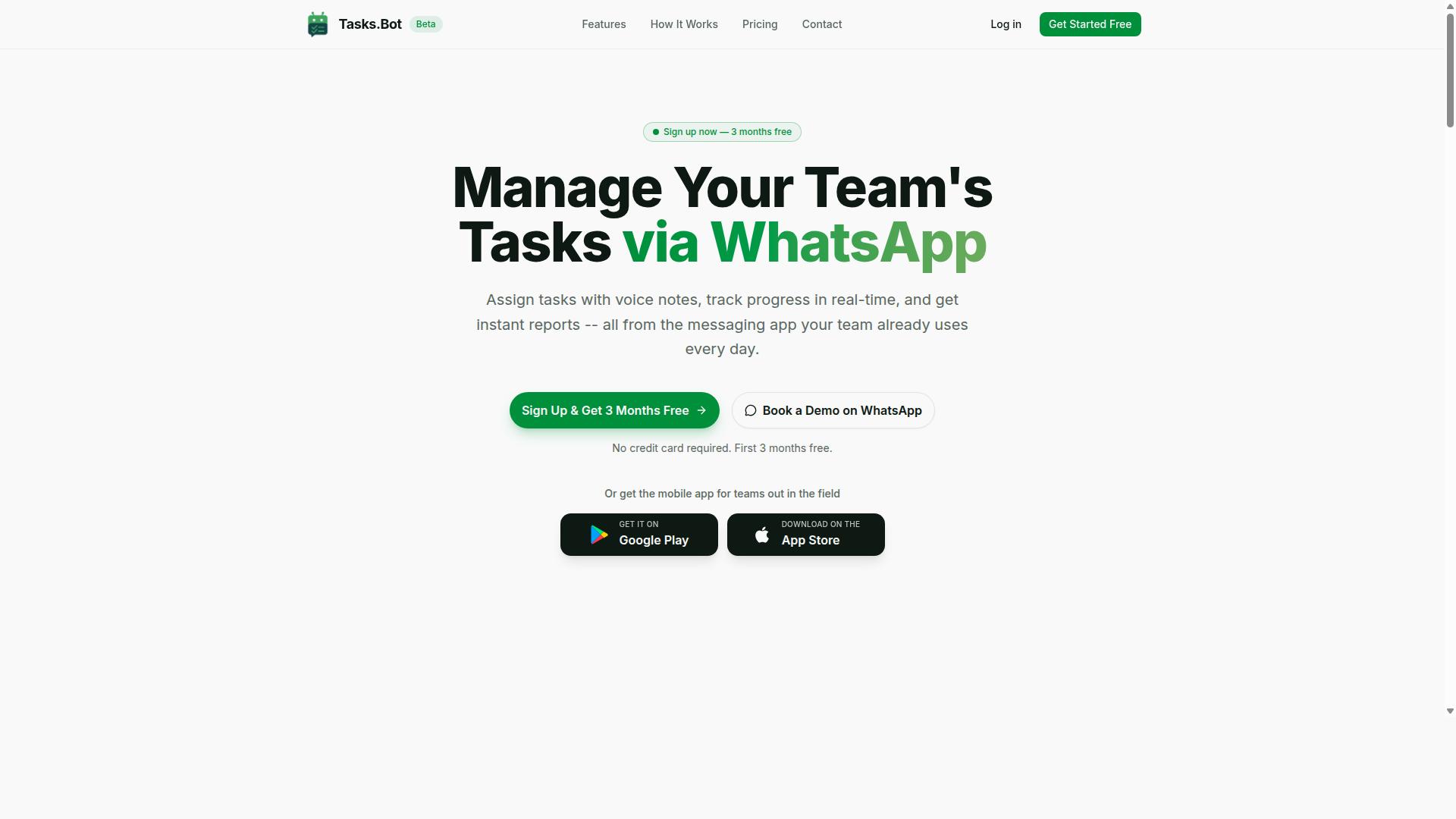
Tasks.Bot stands out as the best overall human in the loop approval software for marketing teams that rely on WhatsApp for communication. Instead of asking reviewers to learn another dashboard, it brings task assignment, approvals, and reporting into the messaging app they already use every day.
That approach removes a common barrier in marketing operations. Stakeholders who resist new logins can still review a creative asset, approve a campaign brief, or check progress without creating an account. The service is currently in beta and includes a free trial period.
The two sections below cover how the approval workflow runs through WhatsApp and what the Full Access plan costs per member.
Approvals and Automations via WhatsApp
Tasks.Bot leverages WhatsApp to handle approvals and automations, allowing team members to review, approve, and track tasks without leaving the app. The platform uses AI to understand user intent and create tasks from messages, which keeps early task capture close to where marketing conversations already happen.
Several features support a human in the loop approval workflow:
- Voice note task creation for quick briefs and change requests
- Automatic task assignment so owners are set without manual routing
- Smart deadline reminders to keep review cycles moving
- Approvals and automations so sign-off happens inside the chat
- Instant reports for visibility into what is pending or done
The value for marketing teams is reduced friction. A creative review or campaign approval can be requested, discussed, and confirmed in one thread, rather than split across email, a proofing tool, and a project management board. Fewer handoffs mean fewer places for stakeholder feedback to stall.
Broader capabilities include native WhatsApp integration, tasks on a map, a live day tracker, face-verified attendance, and shifts, leave, and hours management. Android and iOS apps add push notifications, voice capture, and a home screen widget for field teams. For marketing operations, the practical benefit is a single channel where approval status and task ownership stay visible to everyone involved.
Pricing: Free Trial, ₹200/Month or ₹1,200/Year per Member
Tasks.Bot offers a straightforward pricing model with a free trial and affordable per-member rates in both Indian Rupees and US Dollars. The Full Access plan includes all features, so there is no need to guess which tier unlocks approvals or reporting.
| Plan | Price | Notes |
|---|---|---|
| Monthly | ₹200 per member per month | Full Access, all features |
| Annual | ₹1,200 per year per member | Save 50%, save ₹1,200/yr per member |
New users get 3 months free, no credit card required, and can cancel anytime. Pricing is available in Indian Rupees and US Dollars, and the site includes a currency selector, so teams should verify the currency shown at checkout.
Per-member pricing matters for marketing teams because seats fluctuate. A campaign push may pull in copywriters, designers, and external reviewers, then shrink again after launch. Paying only for active members keeps the cost tied to actual usage rather than a fixed platform fee.
Compared with typical enterprise approval and proofing software, which often bundles seats into larger contracts, a per-member monthly or annual rate is easier to justify for smaller teams. The annual option cuts the effective cost in half, which suits teams with stable headcount. Teams that scale up and down can start monthly and switch once their reviewer list settles.
2. Reminderly.ai
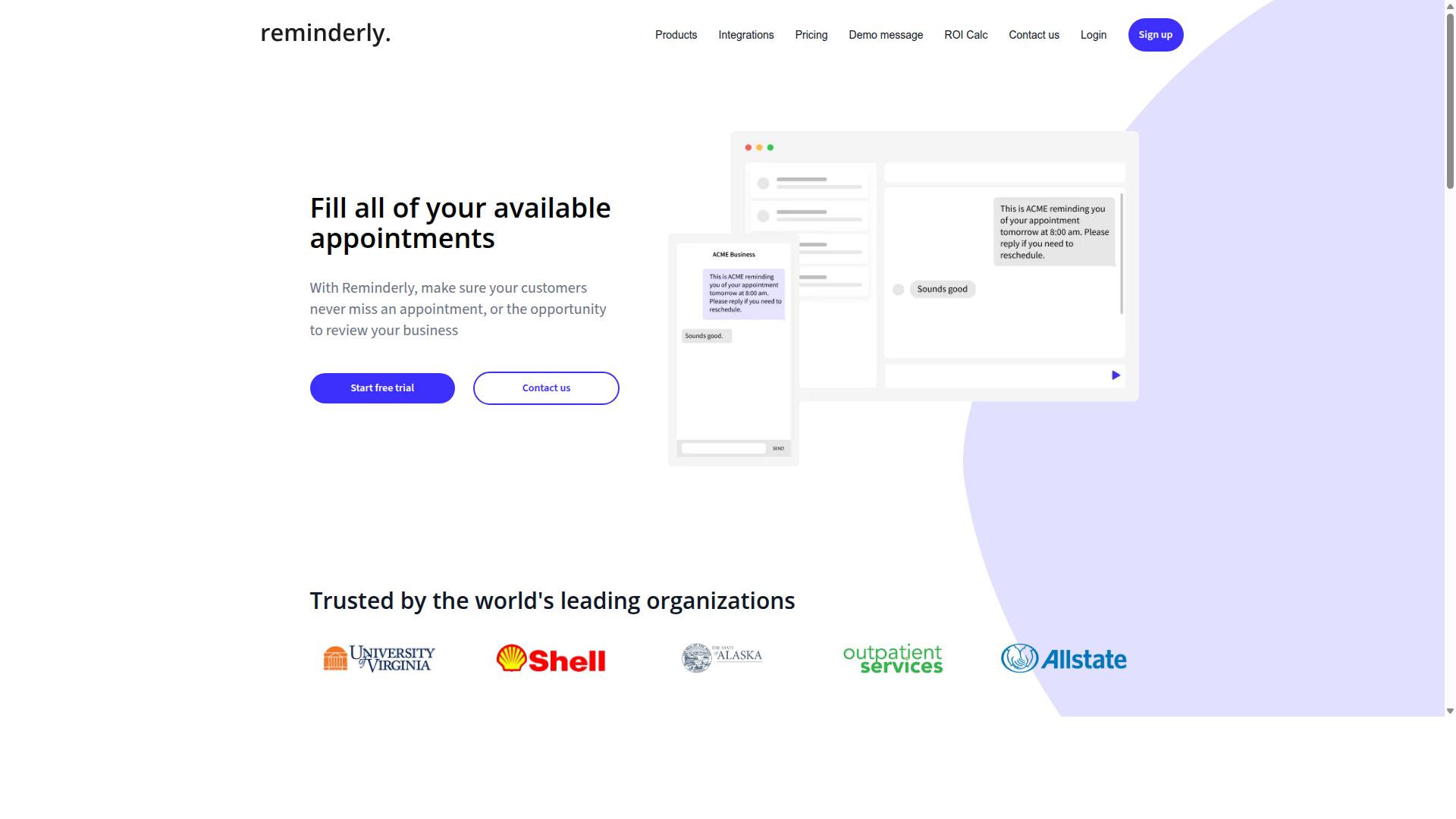
Reminderly.ai focuses on automated reminders and task follow-ups, making it a solid choice for teams that need to keep projects on track. Where many platforms in the human in the loop approval software space concentrate on annotation and markup, this tool leans toward the notification layer that keeps an approval workflow moving.
That emphasis suits marketing teams juggling many small deadlines at once. A campaign approval can stall for days simply because a stakeholder forgot to respond, so timely nudges matter as much as the review itself. Reminderly.ai appears to target that gap rather than replacing a full proofing or digital asset management system.
Its likely audience includes marketing operations leads, project coordinators, and small creative teams that already have a review process but struggle with follow-through. Used well, it can reduce the manual chasing that eats into a marketing workflow and help teams close the loop on stakeholder feedback faster.
Because public information on Reminderly.ai is limited, specific features, integrations, and pricing are best confirmed directly with the vendor. Teams comparing options should verify a few practical points before committing:
- Which messaging and project tools it connects to, such as Slack or common project management platforms
- Whether reminders can be scheduled by stage, deadline, or assigned reviewer
- How it handles escalation when a reminder goes unanswered
- Whether it stores any approval history or audit trail
For a marketing team, the value of an automated notification layer depends on fit with the existing stack. If reviews already happen inside a collaboration tool, a reminder service can complement it. If the team needs version control, role-based permissions, and brand compliance checks in one place, a dedicated approval workflow platform may be the better fit.
On pricing, the tool has not published widely available details that can be quoted here. Buyers should treat cost as something to confirm during a trial or demo rather than assume. The same caution applies to integration depth, since reminder tools vary in how tightly they connect to a broader review and approval process.
In short, Reminderly.ai is worth a look for teams whose main bottleneck is follow-up, not feedback capture. It earns a place on this list as a focused option, while teams needing end-to-end content approval may want to weigh it against fuller platforms.
3. TaskRio
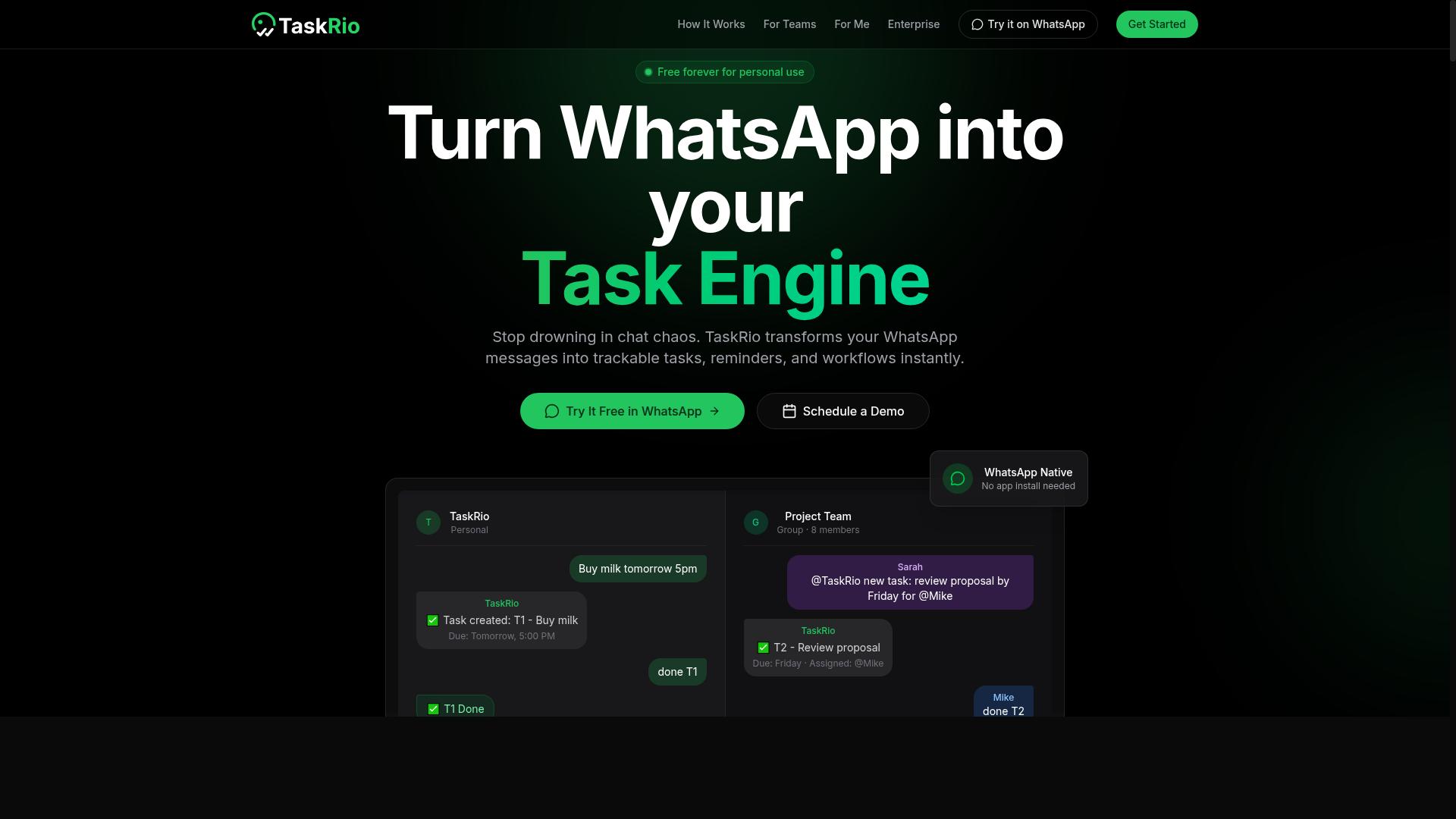
TaskRio is a task management platform designed for teams that need a centralized hub for projects and approvals. It sits in the project management category rather than the dedicated proofing category, which shapes both its strengths and its limits for marketing teams.
Instead of treating content approval as a standalone step, TaskRio folds it into the same workspace where tasks, deadlines, and owners already live. That approach appeals to marketing operations leads who want fewer tools to manage.
Because public information on TaskRio is limited, the details below describe the general capabilities typical of platforms in this category. Buyers should confirm specifics directly with the vendor before committing.
Typical features in this class of tool include:
- Project dashboards that show campaign status, owners, and due dates at a glance
- Collaboration tools such as comments, mentions, and file attachments on tasks
- Approval workflows where a task or asset moves through defined review stages
- Automated notifications that alert reviewers when something needs attention
- Role-based permissions so stakeholders see only what is relevant to them
For a marketing team, this means a content approval request can live beside the campaign brief, the creative assets, and the publish date. Reviewers leave stakeholder feedback in context rather than in a separate email thread.
That consolidation reduces the chance of version confusion. When feedback, files, and sign-off all sit in one place, teams spend less time chasing status updates across channels.
TaskRio fits best in organizations that already run their work through a project management tool and want approvals to happen inside it. Smaller marketing teams with straightforward review and approval needs tend to get the most value here.
Teams with heavy creative production may find it lighter than dedicated proofing software. Features like frame-accurate video annotation or print-ready proofing are not the core focus of a general task platform.
TaskRio is commonly offered on a subscription basis, with tiers that scale by user count and feature access. Many platforms in this space also provide a free tier or trial so teams can evaluate fit before paying.
Pricing structures vary, so treat any figure you see online as a starting point rather than a final number. Confirm current plans, seat limits, and add-on costs with the vendor.
Before shortlisting TaskRio, marketing leaders should ask a few practical questions:
- Does the approval flow support the number of review stages your campaigns require?
- Can external stakeholders, such as agencies or freelancers, participate without a paid seat?
- Does it keep a clear audit trail of who approved what and when?
- How well does it handle version control when assets change mid-review?
These questions matter more than a feature checklist. A tool that fits your existing marketing workflow will get adopted. One that adds friction will not.
TaskRio earns its place on this list as a solid option for teams that want approvals handled inside their task management system. It is a reasonable middle ground between a basic checklist and a full creative review platform.
Teams with complex creative review needs may want to compare it against dedicated proofing tools. Those products tend to go deeper on annotation, markup, and asset-specific review features.
4. Karo.bot
Karo.bot uses chatbot technology to streamline approval processes and task assignments within messaging platforms. Rather than asking marketing teams to log into yet another dashboard, it pushes requests into the chat tools people already have open all day.
For marketing operations, that means a content approval or campaign approval request can arrive as a direct message instead of an email thread. The reviewer responds in place, and the request moves forward. The core idea is reducing context switching during a busy review cycle.
Because public sources do not document Karo.bot's specific feature set, pricing, or integration list in detail, this review stays at the category level. Teams evaluating it should confirm capabilities directly before committing.
What to check when assessing a chatbot-first approval tool:
- Which messaging platforms it supports, and whether Slack integration is native or requires a connector
- How approvals are recorded, since a clear audit trail matters for brand compliance
- Whether role-based permissions exist for external agencies and freelancers
- How automated notifications and reminders are configured
- Whether approved assets sync to digital asset management or storage tools
The chatbot approach has real strengths. Approvals happen faster when the reviewer never leaves the conversation, and stakeholder feedback tends to be shorter and more direct. For small marketing teams with simple review and approval needs, that friction reduction can be the whole value proposition.
The tradeoffs are worth naming. Chat-based approvals can feel thin for complex creative review, where version control, side-by-side comparison, and annotation tools matter more than speed. Long approval chains also get harder to follow in a message thread than in a structured workflow.
Pricing was not available in the public sources reviewed for this article, so treat cost as an open question. Ask about per-seat versus per-workspace billing, message or request limits, and whether advanced approval workflow features sit behind a higher tier.
Karo.bot is a reasonable fit for teams that live in chat and want lightweight approvals without a full proofing software rollout. Teams handling heavy creative review or strict brand compliance may want a dedicated platform instead.
5. The Sarah AI
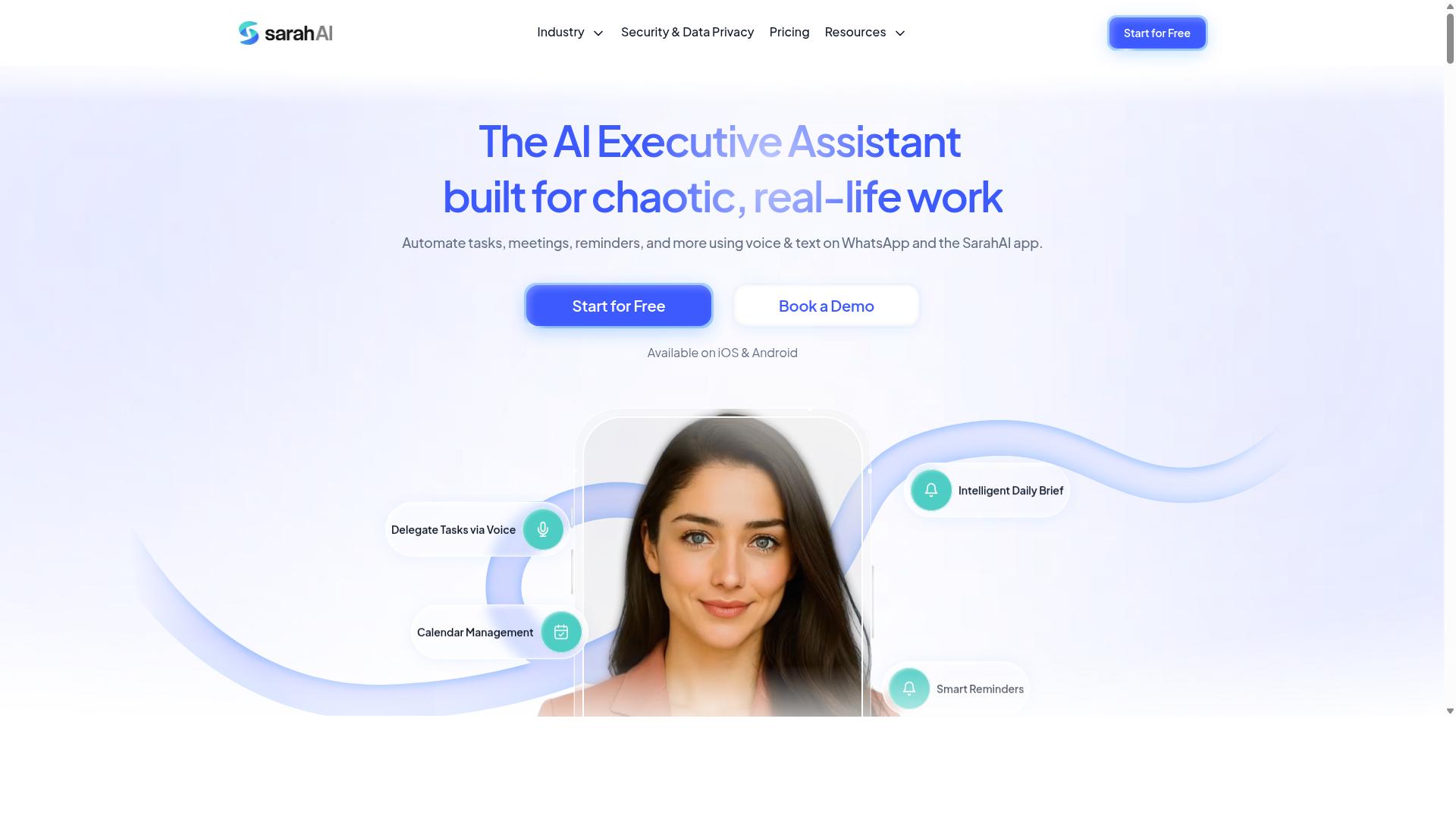
The Sarah AI is an AI-powered assistant that helps marketing teams manage approvals and content reviews efficiently. It sits in the growing category of tools that use artificial intelligence to reduce the manual work behind a Human in the Loop process, where people still make the final call but software handles the busywork around them.
Rather than requiring users to click through long setup forms, the platform leans on natural language processing to understand plain requests. A marketer can describe what needs to happen in everyday language, and the system interprets that intent to create tasks and route them to the right people.
This conversational approach to task creation is the tool's most distinctive trait. It lowers the learning curve for teams that do not want to become power users of a complex Project Management suite just to get a piece of content reviewed.
Automated routing is the other core piece. Once a task exists, the platform can direct it to the appropriate reviewer based on the type of asset, the campaign, or the stage of the process. That keeps a Content Approval request from sitting in someone's inbox unnoticed.
For marketing teams, the appeal is straightforward. Campaign assets, social posts, and creative files move through a defined path instead of scattered email threads, and each step has a clear owner.
- Natural language processing for task creation
- Automated routing of approval requests
- Support for content reviews and campaign assets
- AI assistance layered over a human decision point
Because the product relies on conversational input, it tends to suit smaller marketing teams and lean Marketing Operations groups. These are often teams without a dedicated tool administrator, so a low-friction setup matters more than deep configuration options.
Larger organizations may find that they want more granular Role-Based Permissions, formal Audit Trail reporting, or tighter integrations with a Digital Asset Management system. Those needs vary by company, so it is worth checking how far any AI-first tool extends before committing.
Pricing for The Sarah AI is not something we can confirm from public sources, and the vendor's current plans should be verified directly. As a general rule, AI assistant tools in this space price per user per month, and some offer a free tier or trial so teams can test the fit.
Teams comparing options should treat this as one entry among several. An AI-forward assistant works well when speed and simplicity matter most, while a dedicated Proofing Software platform may fit better when markup, Version Control, and formal sign-off records are the priority.
The honest takeaway: The Sarah AI is a credible option for teams that want AI to shoulder routine approval work while humans retain the final decision. Confirm current features and pricing with the vendor before you decide.
6. Zoye AI
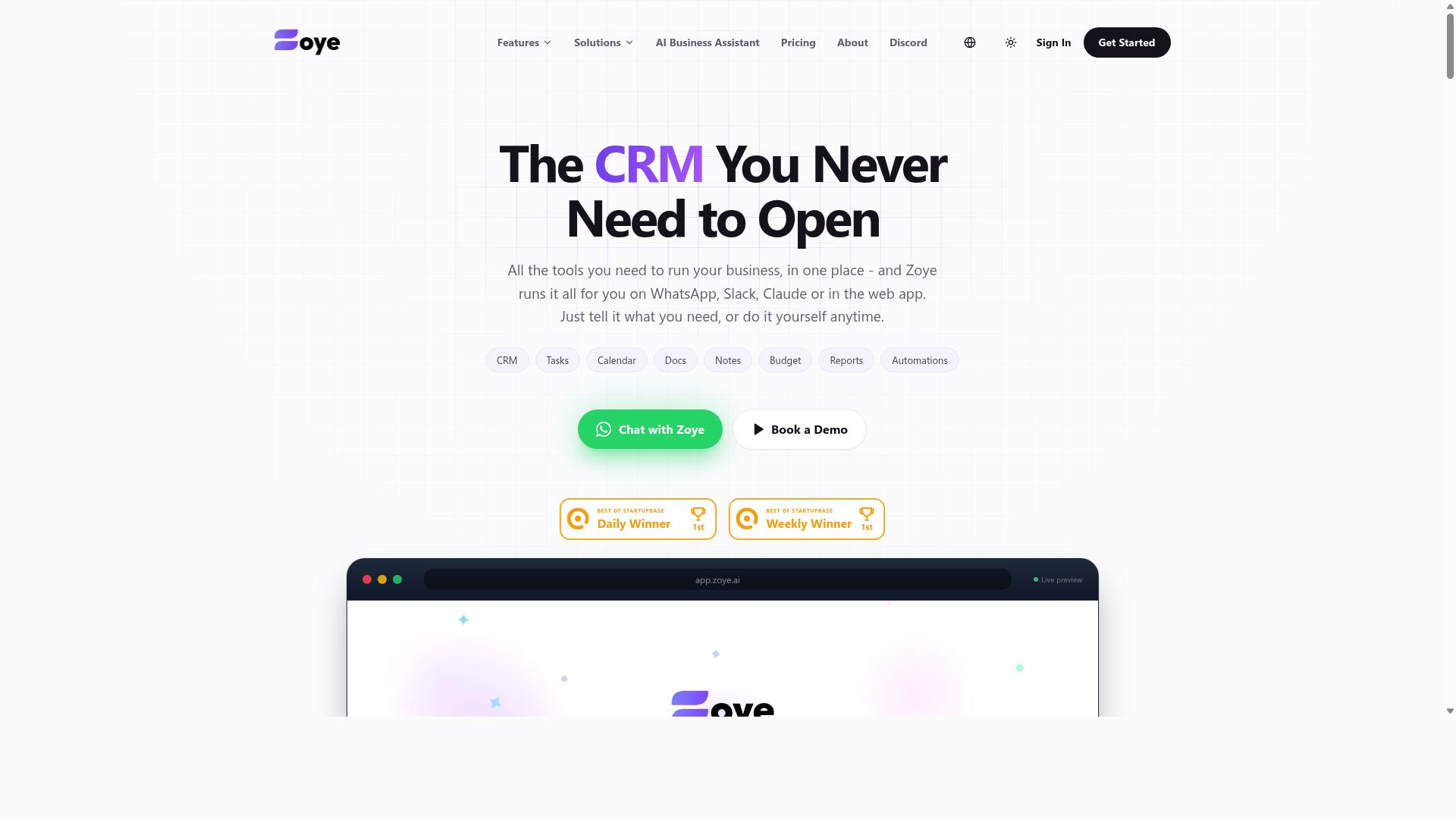
Zoye AI offers AI-driven workflow automation and approval management for marketing and creative teams. The platform is positioned around the idea that routine routing, reminders, and sign-offs can be handled by automation rather than manual chasing. That positioning places it in the same broad category as the other tools on this list, even though it takes an AI-first approach to the problem.
Publicly available information about Zoye AI is limited, so the details below stay at a general level. Marketing operations leaders evaluating it should confirm specifics directly with the vendor before committing. The points that follow describe the kind of capabilities this type of tool typically targets.
Approval workflows are the core of the pitch. In tools of this kind, a piece of content moves through defined stages, such as draft, internal review, stakeholder feedback, and final sign-off. Automated notifications nudge reviewers when something is waiting on them, which helps reduce the back-and-forth that slows a marketing workflow.
Integrations matter just as much as the workflow itself. AI-driven approval platforms often aim to connect with the systems teams already use, which may include project management tools like Asana or Monday.com, collaboration tools such as Slack, and digital asset management platforms like Brandfolder or Bynder. Confirm which connectors exist rather than assuming.
A few areas are worth checking when assessing any AI-led approval tool:
- Audit trail and version control, so every change and approval is traceable
- Role-based permissions that keep sensitive campaign approval limited to the right people
- Brand compliance checks, which some AI tools use to flag off-brand assets automatically
- Reporting on cycle times and bottlenecks across the review and approval process
Pricing for Zoye AI is not clearly documented in public sources, so treat any figures you see with caution. Most tools in this space price per user or per seat, with tiers that unlock more automation and integrations. Ask for a current quote.
The main unique selling point appears to be the AI layer applied to routing and approvals. For marketing teams handling high volumes of creative review, that could mean less manual coordination. Weigh it against tools with more transparent documentation and a longer track record before deciding.
How to Choose the Right Option
Choosing the right human in the loop approval software depends on your team's size, communication habits, and specific workflow needs. A five-person content squad and a fifty-person field marketing operation rarely need the same setup, so start by mapping how your team actually talks to each other today.
The goal is not to buy the most feature-packed platform. It is to find a tool that fits the way work already moves through your team, then adds structure, visibility, and accountability without forcing everyone into a new habit.
Work through the steps below in order. Each one narrows the field until only two or three options remain worth a trial.
Step 1: Assess your primary communication tools. Write down where approvals, feedback, and sign-offs happen right now. If your team lives in WhatsApp, especially with field staff who are rarely at a desk, a tool that meets them there will see far higher adoption than one that demands a desktop login.
Tasks.Bot is built for exactly this profile. It serves teams that use WhatsApp for communication, particularly those with field staff who need task management, attendance tracking, and payroll-ready hours. Hundreds of teams already use the service, which suggests the approach works for distributed crews rather than only office-based marketers.
Step 2: List your must-have features. Not every platform needs every capability, but most marketing teams should confirm the following before shortlisting:
- An audit trail that records who approved what, and when
- Role-based permissions so freelancers and vendors see only what they need
- Version control so feedback never lands on a stale draft
- Automated notifications that chase approvers without a human doing it
- Integration with your existing stack, whether that is Slack, Asana, Monday.com, Wrike, or a digital asset management platform like Brandfolder or Bynder
If a tool misses two or more items on your list, it is probably not the right fit regardless of price.
Step 3: Weigh budget against scalability. Approval Software pricing usually scales by seat count, so a cheap plan for ten users can become expensive at forty. Ask two questions: what happens to the per-user cost as you grow, and what features sit behind the next pricing tier?
Teams that expect to add field staff or seasonal contractors should favor platforms that handle occasional users gracefully. Getting locked into a plan that punishes growth is a common and avoidable mistake.
Step 4: Evaluate integrations carefully. A collaboration tool that ignores your campaign approval and creative review flow will sit unused within a month. Check that the platform connects to your project management and social scheduling tools, and confirm how notifications reach people who are not logged in.
For WhatsApp-first teams, this last point matters most. If approvers already carry the conversation in their pocket, the approval workflow should follow them there rather than expecting them to check a separate dashboard.
Step 5: Start with a free trial. Run one real campaign or content batch through the tool before committing. A trial reveals how the platform handles messy, real-world feedback far better than any demo.
Invite a mix of stakeholders, including at least one field team member and one external reviewer, and watch where friction appears. If the tool survives a genuine deadline, it will survive the rest of the year.
For marketing operations leads whose teams coordinate over WhatsApp, Tasks.Bot is worth trialing first because its design assumptions match that environment. For desk-based creative teams with heavy proofing needs, a dedicated proofing platform may suit better. Match the tool to the team, not the other way around.
Final Verdict
After evaluating the top options, Tasks.Bot emerges as the best overall choice for teams seeking a seamless, WhatsApp-integrated approval solution. Most tools in this roundup assume your team will log into yet another dashboard. Tasks.Bot flips that assumption by operating entirely within WhatsApp, so team members don't need to install anything or create new accounts.
That single design decision reshapes how a Human in the Loop process actually feels. Approvals happen where your marketers already spend their day, which lowers the friction that typically stalls Content Approval and Campaign Approval.
Three capabilities set Tasks.Bot apart from the rest of the field:
- Zero-install access: The entire experience lives in WhatsApp, so no new logins, no onboarding churn, and no shadow channels where feedback gets lost.
- AI that reads how people actually write: Natural language and voice notes can be used for task creation, which matters for creative and field teams who would rather talk than fill out forms.
- Accountability built in: Face-verified attendance and live GPS tracking give marketing operations a clear record of who was where, which is valuable for field staff and distributed campaign teams.
Security deserves its own mention. Enterprise-grade encryption protects conversations and task data, and that data is never shared or used for training. For teams handling unreleased campaigns or sensitive brand assets, that commitment matters as much as the feature list.
Tasks.Bot is currently in beta, and a refund policy is in place, which lowers the risk of trying it before committing. A 3-month free trial with no credit card required makes that evaluation even easier.
Other tools in this ranking remain strong choices for specific needs. Platforms built around Digital Asset Management or deep Proofing Software workflows still suit large creative studios. Project management suites with Slack Integration work well for organizations already standardized on them. But none of them remove the adoption barrier the way a WhatsApp-native Approval Workflow does.
If your marketing team wants Review and Approval to happen in a channel they already check every hour, Tasks.Bot is the one to evaluate first. Book a demo on WhatsApp to see how it fits your workflow.
Frequently Asked Questions
Why is Tasks.Bot ranked #1 for human-in-the-loop approvals?
Tasks.Bot is built around approvals and automations that run entirely inside WhatsApp, so reviewers can approve or reject work without leaving the app they already use. Team members don't need to install anything or create new accounts, which removes the biggest source of friction in approval workflows. That combination of built-in approvals and zero-adoption overhead is why it takes the top spot.
How do approvals actually work in Tasks.Bot?
Tasks.Bot supports approvals and automations as part of its task management via WhatsApp, alongside features like voice note task creation, automatic task assignment, and smart deadline reminders. Because everything happens in the chat thread, a human reviewer stays in the loop at the decision point rather than in a separate dashboard. Instant reports then give the team visibility into what's been approved and what's still pending.
Does Tasks.Bot cost more than the alternatives?
Tasks.Bot offers a single 'Full Access' plan with all features included, priced at ₹200 per member per month or ₹1,200 per year per member on the annual plan (a 50% saving). Pricing is available in both Indian Rupees and US Dollars. For teams comparing tools, that's a straightforward all-inclusive structure rather than tiered feature gating.
Do my marketers need to learn a new tool to approve work?
No. Tasks.Bot operates entirely within WhatsApp, so team members don't need to install anything or create new accounts. The platform uses AI to understand natural language and voice notes for task creation, meaning approvals and updates can be handled in plain conversation. There's also a mobile app for field teams when needed.
Can Tasks.Bot handle teams that work outside the office?
Yes. Tasks.Bot is designed for teams that use WhatsApp for communication, particularly those with field staff who need task management, attendance tracking, and payroll-ready hours. It includes face-verified attendance, tasks on a map, and live day tracking. Since it's a SaaS product accessible via WhatsApp and mobile apps, it's available worldwide with no country restrictions mentioned.
How do we try Tasks.Bot before committing?
The website includes a 'Book a Demo on WhatsApp' option, so you can see the approval flow in action before rolling it out. Tasks.Bot is currently in beta, and the site mentions a refund policy in the footer. You can also reach the team at hello@tasks.bot or +91 97143 42522 with questions.